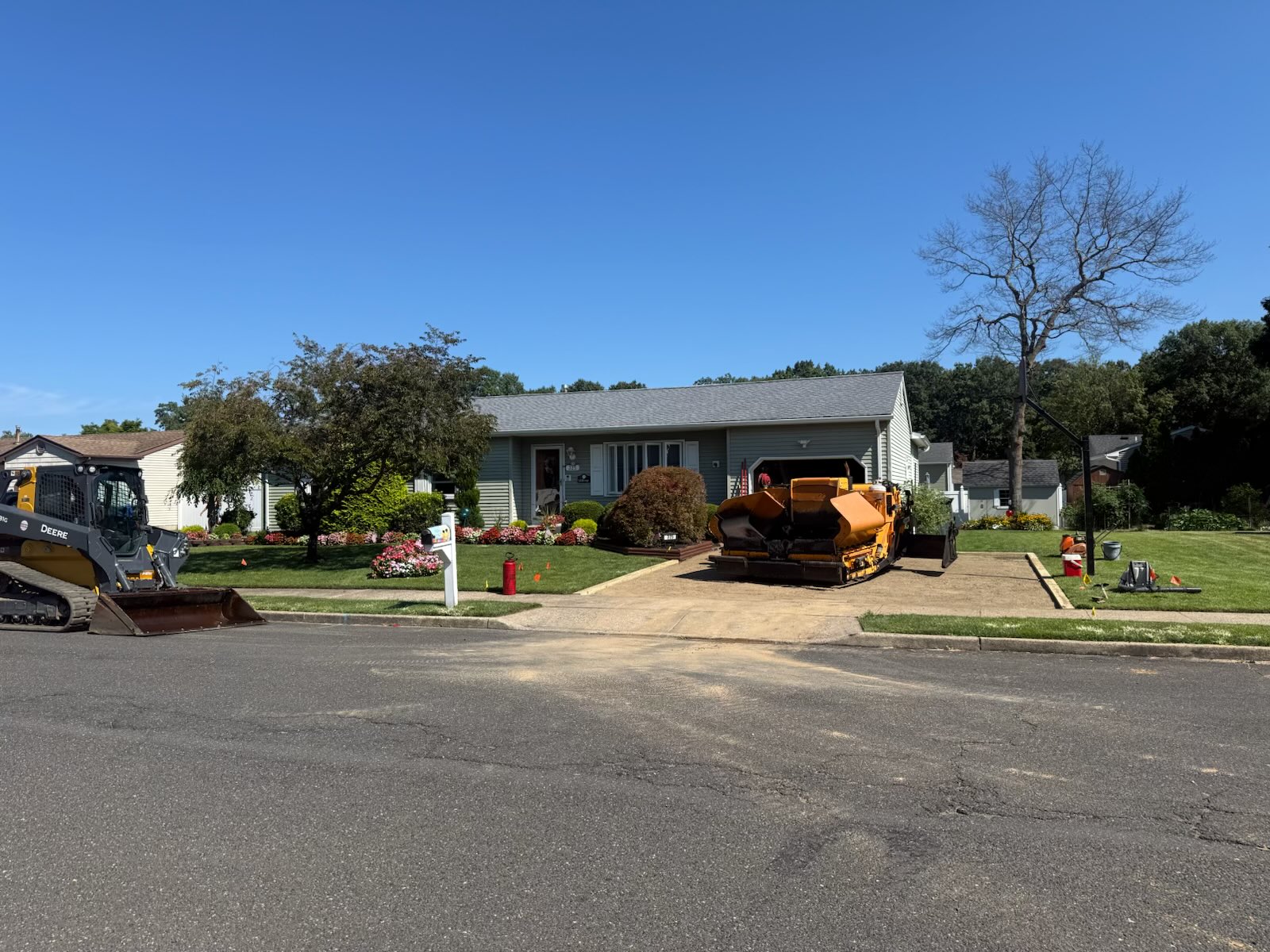
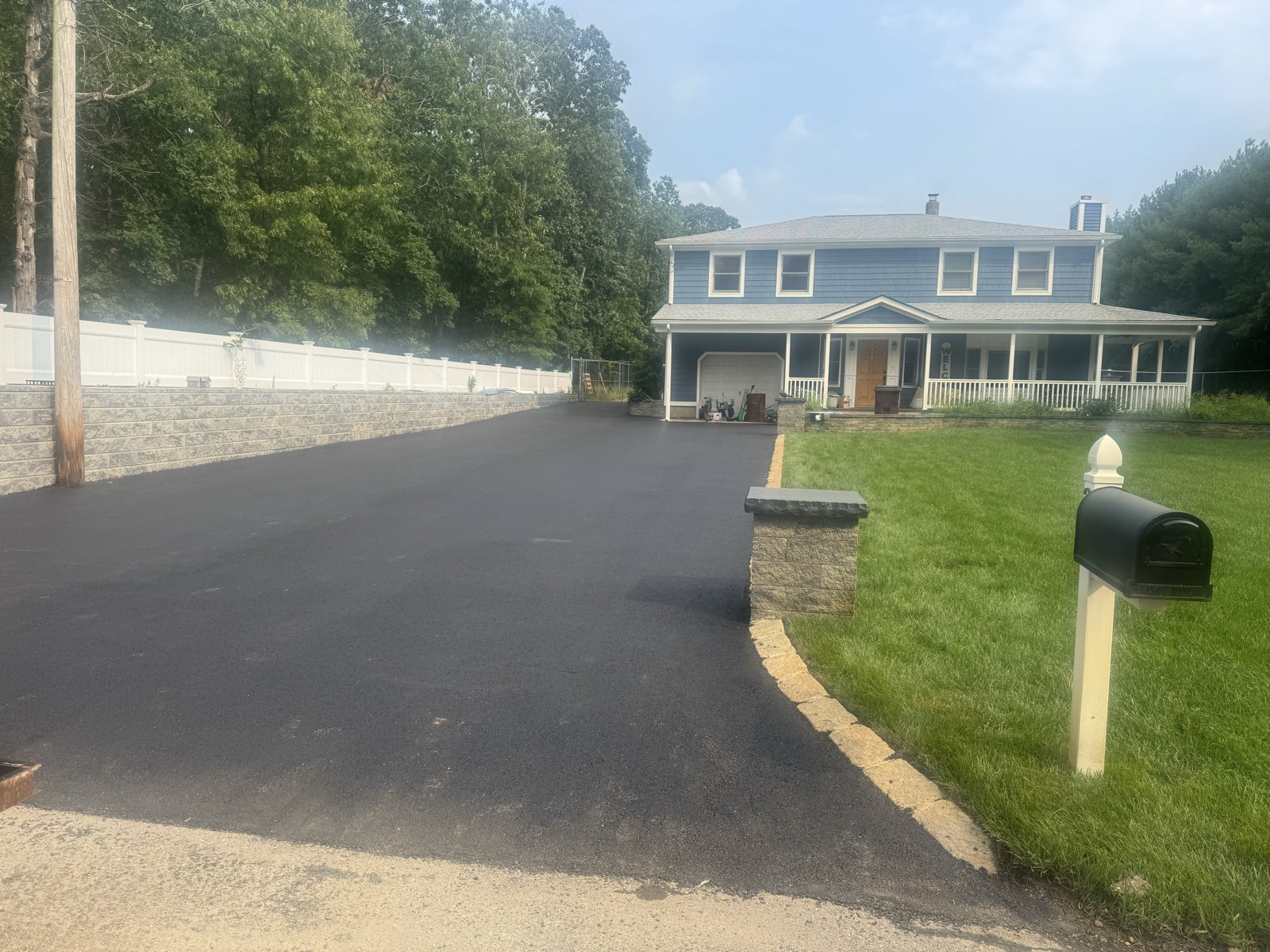
Asphalt driveways, parking lots, sealcoating and repairs across the Jersey Shore. The owner comes out personally, prices the job in front of you, and stands behind the crew that lays it.
From a single cracked apron to a 40,000 sq ft commercial lot — one crew, one number, one person accountable for the result.
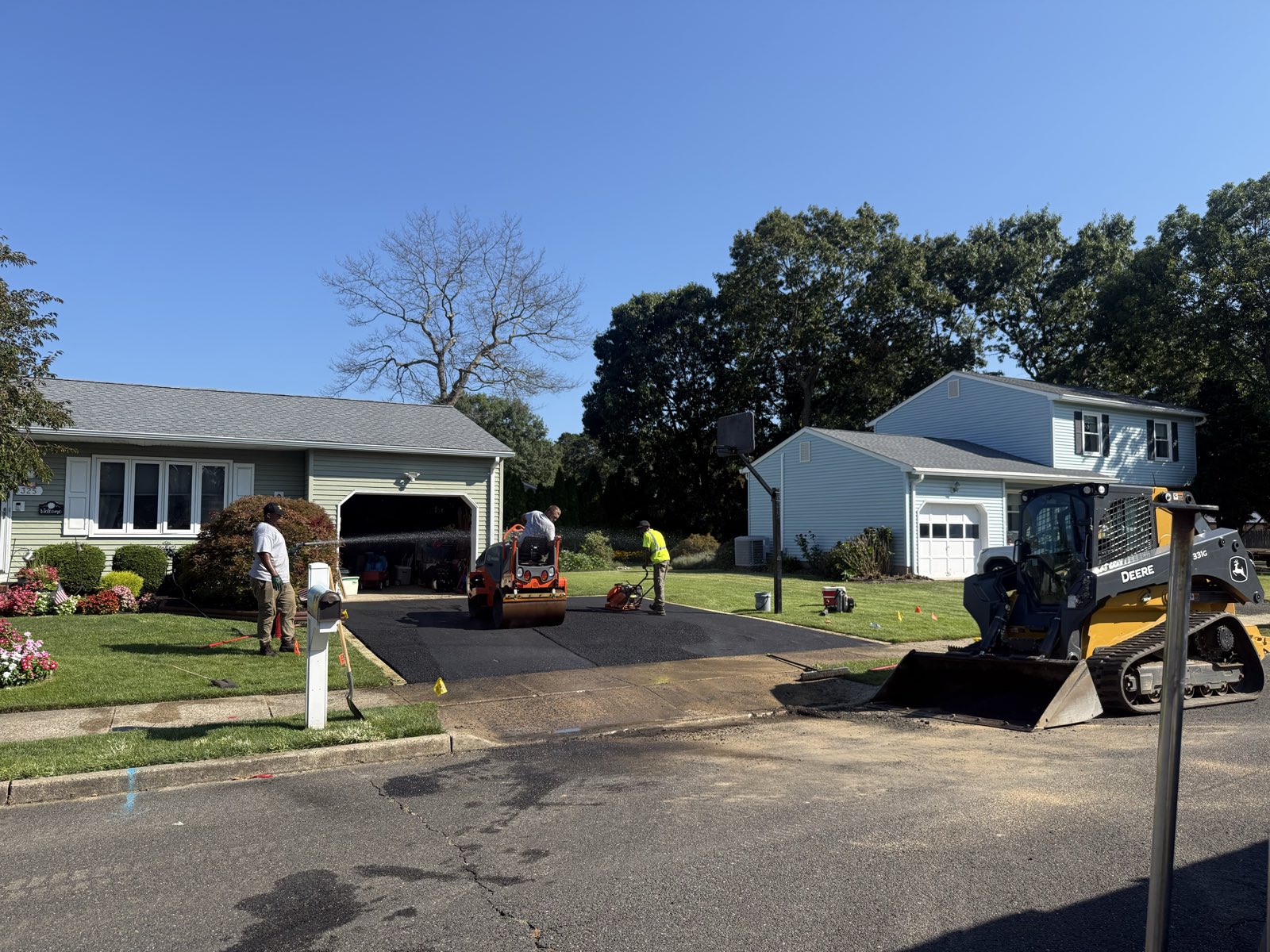
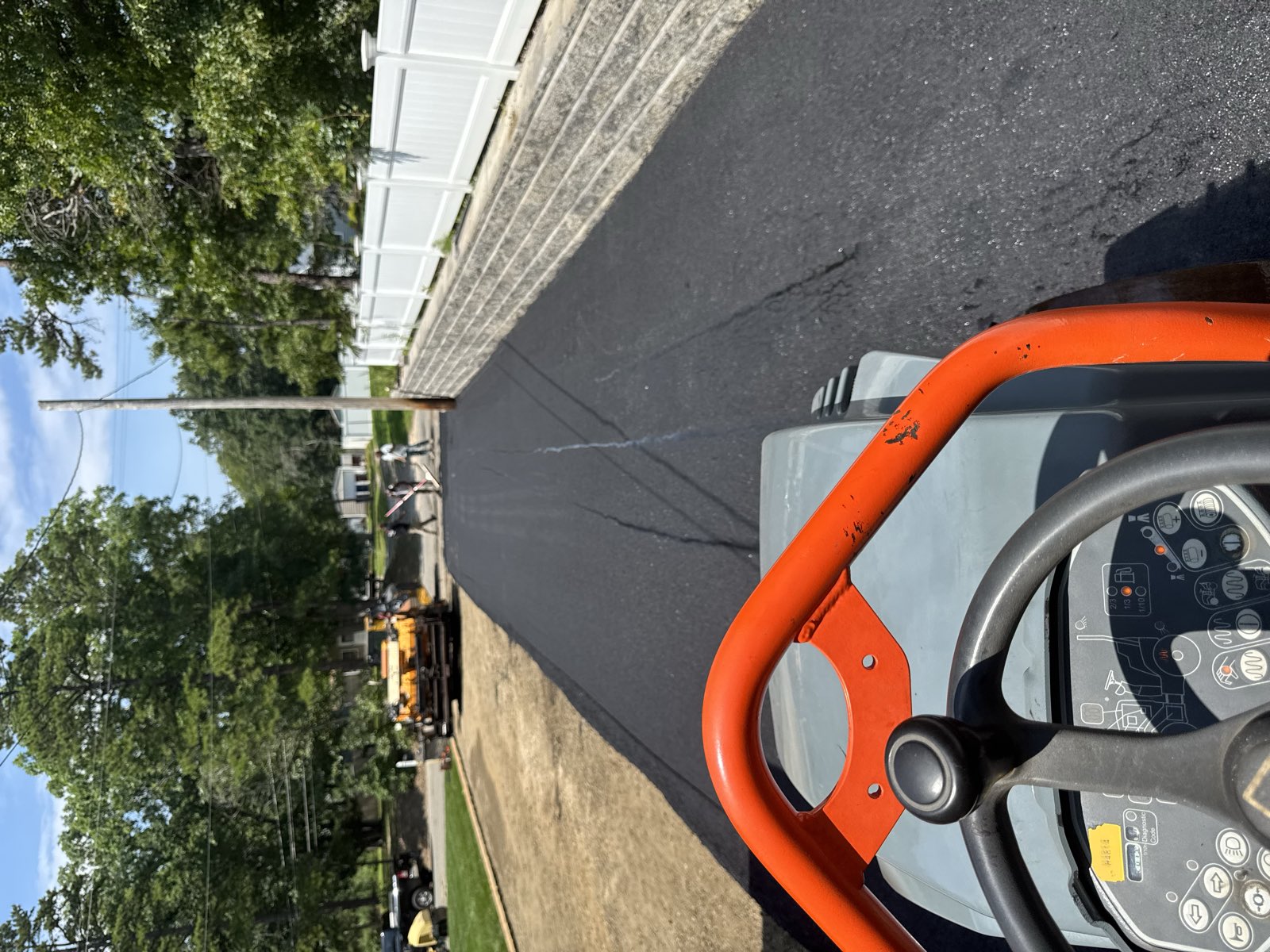
New installs, overlays and full-depth replacements. Proper base, proper compaction, proper pitch so water leaves your driveway instead of sitting on it.
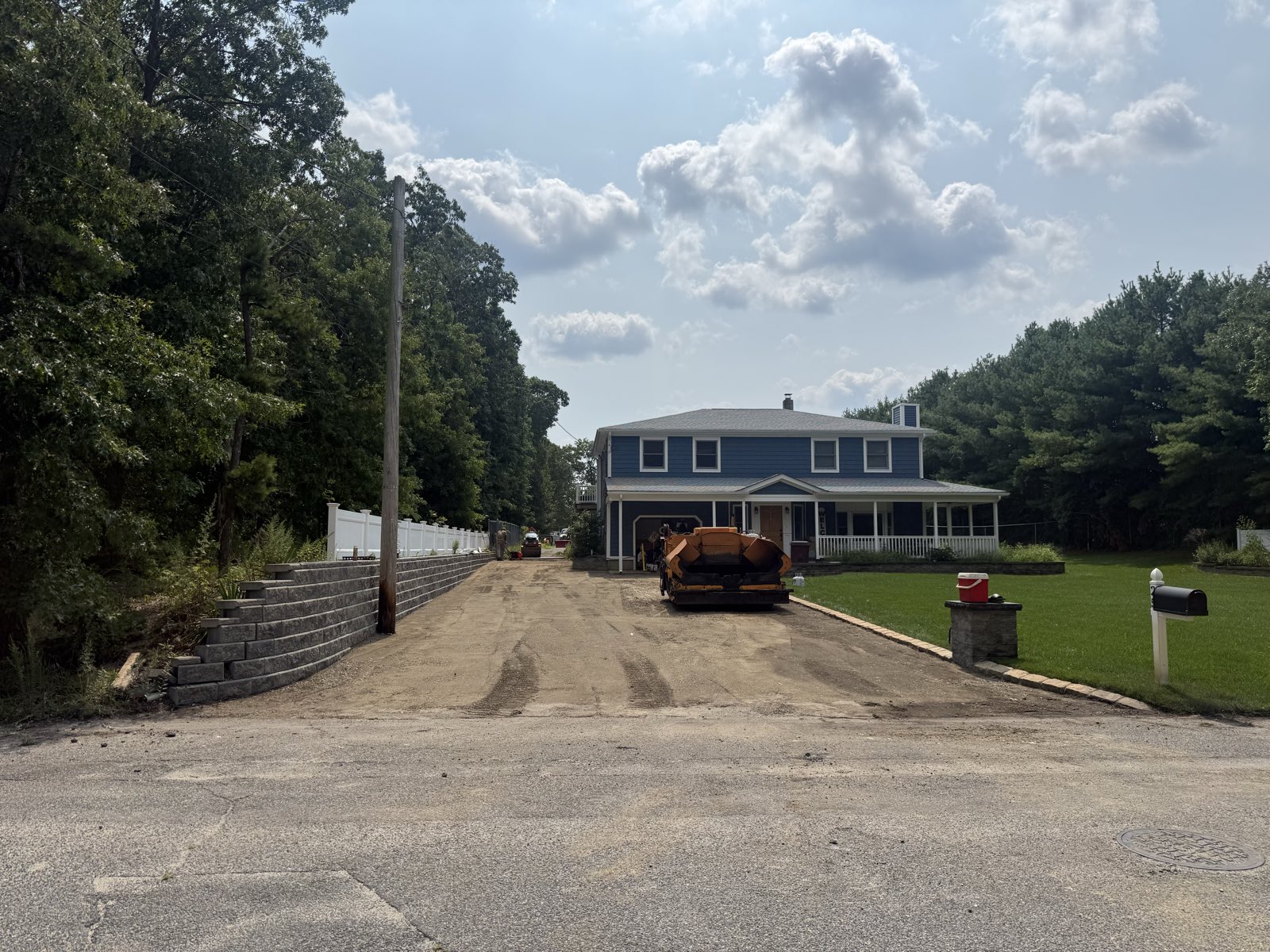
Block and paver edging that turns a basic overlay into a finished, framed driveway — and lets you dial the job to the budget you actually have.
Crack fill first, then a commercial-grade seal. Blocks the UV, water and salt that turn routine maintenance into a full replacement years early.
Potholes, sunken aprons, crumbling edges and trench cuts. Saw-cut clean, tack the joints, compact it properly — a patch that doesn't fail next winter.
Parking lots, private roads, HOA and multi-unit properties. Phased so you never lose the whole lot, and scheduled around your business hours.
Grind the old surface off instead of burying it. Keeps your grade at the garage door and your drainage where it belongs, and recycles the millings.
Most paving outfits send a salesman who measures from the truck window and never comes back. At Premier Paving, the person who quotes your job is the person running it — so nothing gets lost between the handshake and the roller.
Five steps. No mystery, no chasing anyone down for an answer.
Fill in the form or call. We get back to you within one business day and set a time that actually works for you.
The owner comes out, measures, checks your base and drainage, and walks you through the options for your property in person.
You get the scope, materials, thickness and price in writing so you can compare it against anything else on your kitchen table.
You accept, we schedule. Grading, base work and edge cutting happen in one day — often alongside other jobs in your neighborhood.
We come back with the crew and lay it. Compacted, pitched and cleaned up before we leave your property.
Grouping the prep work for several nearby jobs into one day keeps machine mobilization costs down — and that shows up in your price. It also means the base gets a chance to settle and be inspected before hot asphalt goes over it, instead of being rushed in the same afternoon.
Most people call a paving company assuming they need a whole new driveway. Often they don't. Answer four questions and we'll tell you what you're most likely looking at — including when the honest answer is the cheaper one.
Nearly every driveway job is one of these three. Which one you need is decided by the base underneath — not by what you'd prefer to spend.
Because the number would be wrong. Two driveways the same size can price very differently, and every one of the reasons is underneath the asphalt where nobody can see it from a truck window or a satellite image.
The owner comes out, measures, checks the base and looks at where your water goes. You get the options for your property explained in person, then a written proposal with the scope, materials and price on paper. It costs nothing and there's no obligation attached to it.
Plenty of contractors will happily sell you a full replacement when an overlay would have carried the driveway just fine. Here's the test we use, and you can run it yourself before we ever get there.
Find an existing crack and push a screwdriver into it. If it slides straight through past the surface layer, your base has failed — an overlay laid on top of that will crack in the same spots within a season or two. If it hits firm material underneath, your base is sound and an overlay is the smart money.
| Sign | What It Usually Means |
|---|---|
| Hairline surface cracks | Sealcoat — you caught it early |
| Faded gray, brittle surface | Sealcoat or overlay |
| Alligator cracking in patches | Patch those areas, then overlay |
| Alligator cracking everywhere | Base failure — replacement |
| Standing water 24 hours after rain | Pitch problem — needs regrade |
| Sunken or crumbling edges | Edge rebuild, often with a border |
Anyone can lay blacktop. Clean joints, straight edges, correct pitch and a compacted base are what separates a driveway that lasts from one that doesn't.


Six commitments. Not marketing lines — these are the specific things that go wrong with paving contractors, and what we do instead.
The person who prices your job is the person running it. Nothing gets lost between the handshake and the roller, and there's one phone number for the whole thing.
We measure your property, check the base, and look at where your water goes before a number exists. No drive-by pricing, no satellite estimates.
Scope, materials, depth and price on paper before anyone starts. No verbal deals and no surprise add-ons once the equipment is in your driveway.
If your driveway needs a sealcoat and not a rebuild, that's what we'll tell you. We'd rather keep you as a maintenance customer for the long haul than oversell you once.
Base work gets its own day and is inspected before hot asphalt covers it. Grouping nearby jobs also keeps mobilization costs down — and that reaches your proposal in the form of money saved.
Edges finished, debris hauled, driveway roped off with the cure times explained. You shouldn't be sweeping up after a contractor you paid.
Licensing and insurance documentation available on request before any work begins.
We're local. That means the crew isn't driving ninety minutes to get to you, the equipment is already in the area, and if something needs a second look we can be back the same week. Pick your town for local details.
Don't see your town on the list? Check it below — we cover far more than the 24 towns we've written pages for.
Enter your zip code, town, or full address — we'll tell you right now.
Six things decide it: total square footage, whether your base is sound or has to be rebuilt, how much old material has to come out, equipment access, where your water drains, and whether you add block or paver edging.
Two driveways the exact same size can price very differently, and every reason is underneath the asphalt where nobody can see it from the street. That's why we don't quote over the phone and don't price off satellite images — the number would be wrong, and you'd find out on the day the crew showed up.
The on-site estimate is free, there's no obligation, and you'll see the options for your property at different levels so you can pick the one that fits. More on what moves the price.
It comes down to the base underneath. Push a screwdriver into an existing crack — if it slides through past the surface layer, the base has failed and an overlay won't hold. If it hits firm material, an overlay is usually the right call and runs 30–50% less than a full replacement.
We check this in person, show you what we find, and tell you straight. If you only need a sealcoat, we'll tell you that too.
Most residential driveways run two visits. Prep day handles grading, base work and edge cutting — we often prep several nearby jobs the same day, which keeps mobilization costs down for everyone. Pave day is usually a matter of hours once the crew is on site.
Commercial lots get phased so you never lose your whole parking area at once.
Stay off it for a minimum of 7 days. After that, normal car traffic is fine. Keep heavy vehicles, trailers, dumpsters and campers off for about 30 days.
Avoid turning your wheel while stopped — power steering scuffs fresh asphalt easily. And park in slightly different spots for the first few weeks so tires don't sit in the same place. New asphalt keeps curing for months after it goes down.
Every 2 to 3 years for most driveways around here. Wait 12 months after new asphalt goes down so it can cure first.
Sealcoating on too tight a schedule builds up layers that crack and peel. Waiting too long lets UV and water break down the binder — and by then you're pricing an overlay instead of routine maintenance.
One important caveat: sealcoating only protects a driveway that's structurally sound. If the base underneath has failed, sealing it is money thrown away and what you actually need is paving. We'll tell you which one you're looking at.
It's a border of block or paver stones set along the edges of your driveway. Two reasons people do it: it looks far more finished than a raw asphalt edge, and it protects the part of a driveway that fails first.
Driveway edges crumble because water works underneath from the sides. A proper border holds that edge and gives the asphalt something to lock against. It also lets us dial a basic overlay up or down to hit the price point you're actually working with. See the options here.
Yes — parking lots, private roads, HOA and multi-unit properties, and municipal-style work. We phase larger lots so your business stays open, and we can schedule around your hours where it matters. Commercial details here.
Roughly April through October is prime. Hot mix needs enough ambient temperature to compact properly before it cools, so mid-winter paving is a gamble.
Sealcoating is even tighter — it needs surface temps above about 50°F and a dry stretch afterward. If you're thinking about spring, get on the schedule early; the calendar fills fast once the weather turns.
Within one business day. Send the form or call (732) 685-7166 — we'll set a time for the on-site estimate, come out, and follow up with a written proposal.
Give us the basics and we'll call to set up a time. The estimate is free, it's done in person, and you'll leave the conversation knowing exactly what your options cost.
Spring and summer slots go fast in Ocean and Monmouth County. Get your free on-site estimate on the books before the calendar fills up.